
Chatsubo
Published:
“Picture a world teeming with AI agents: lively companions, yet with lives of their own”
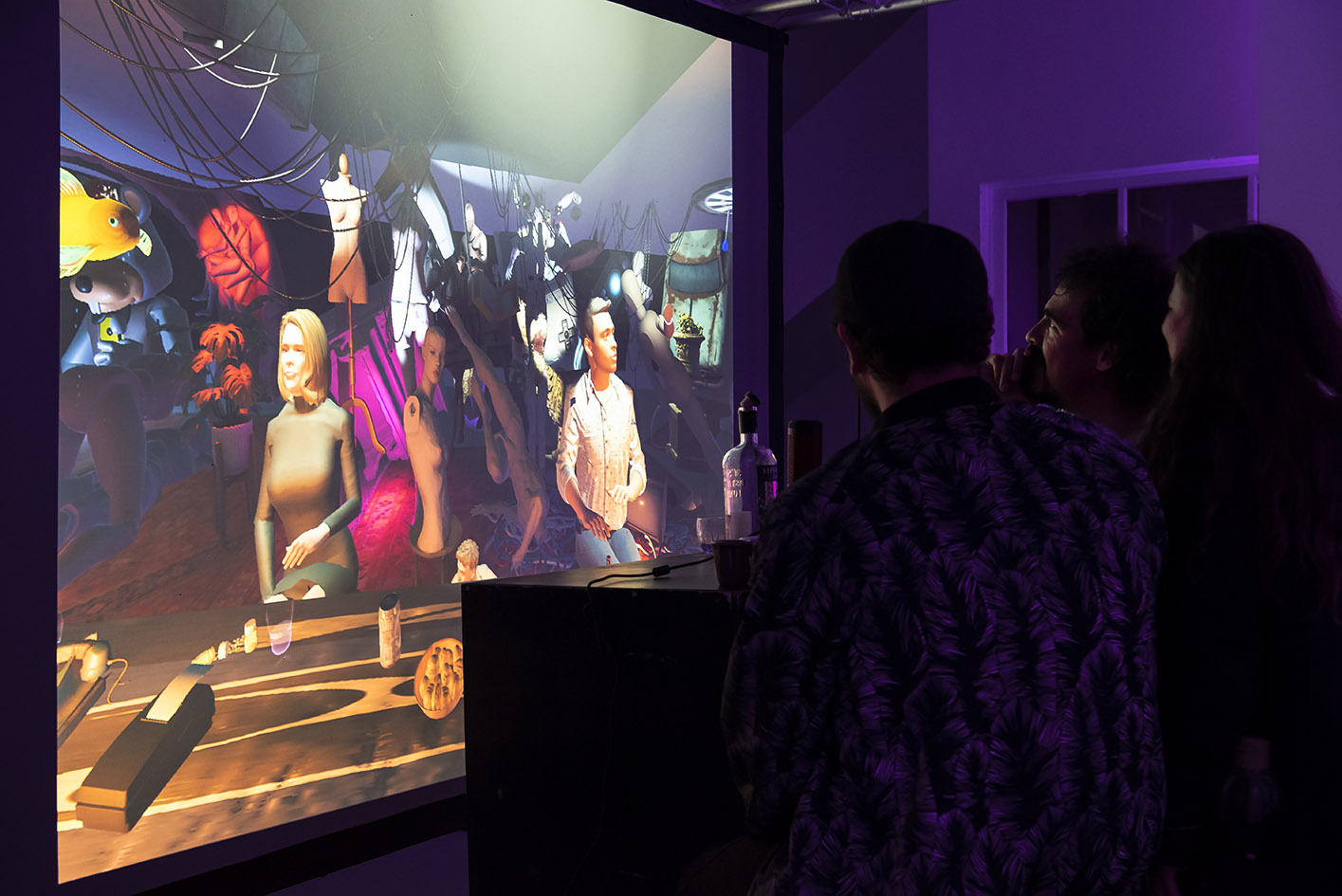
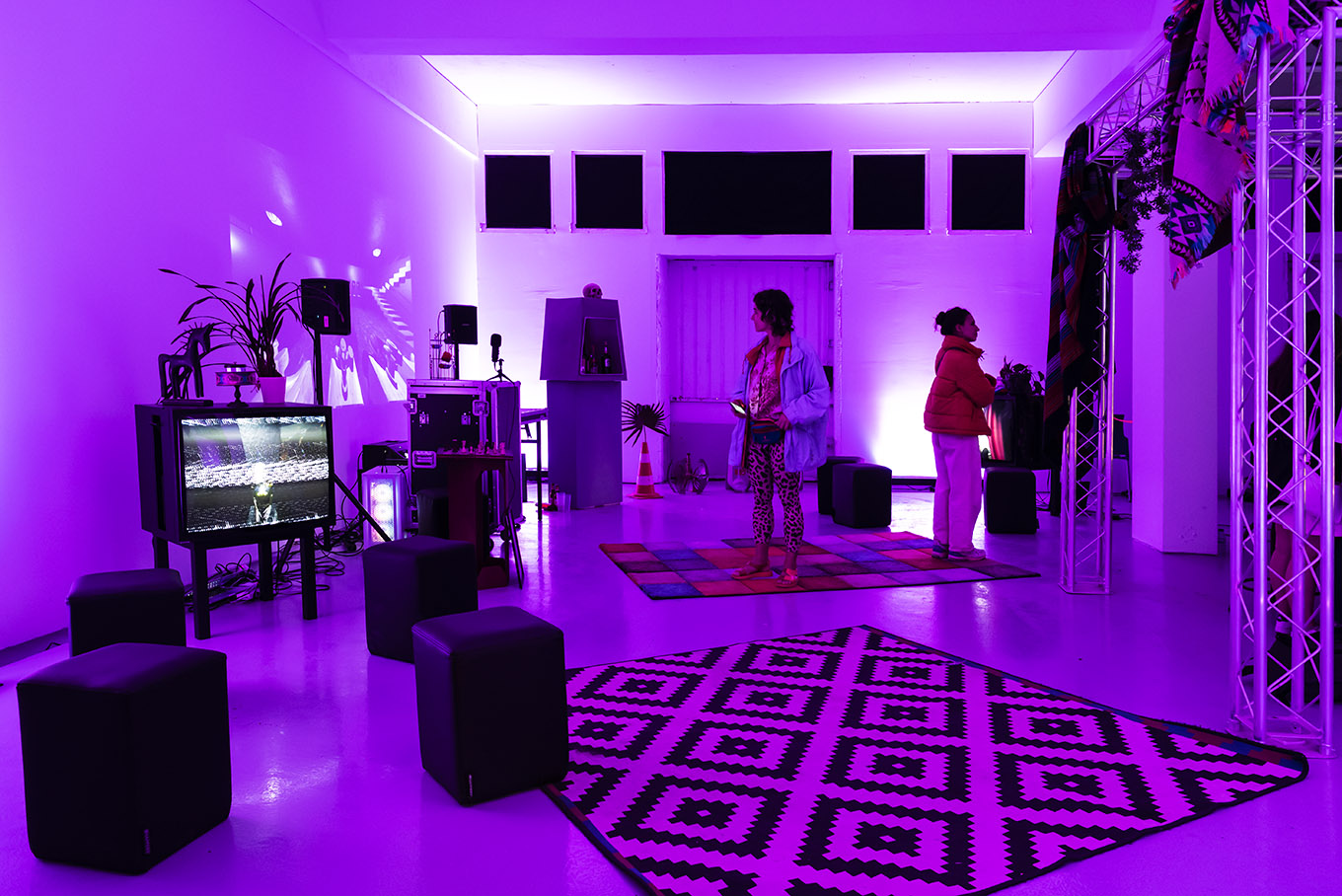
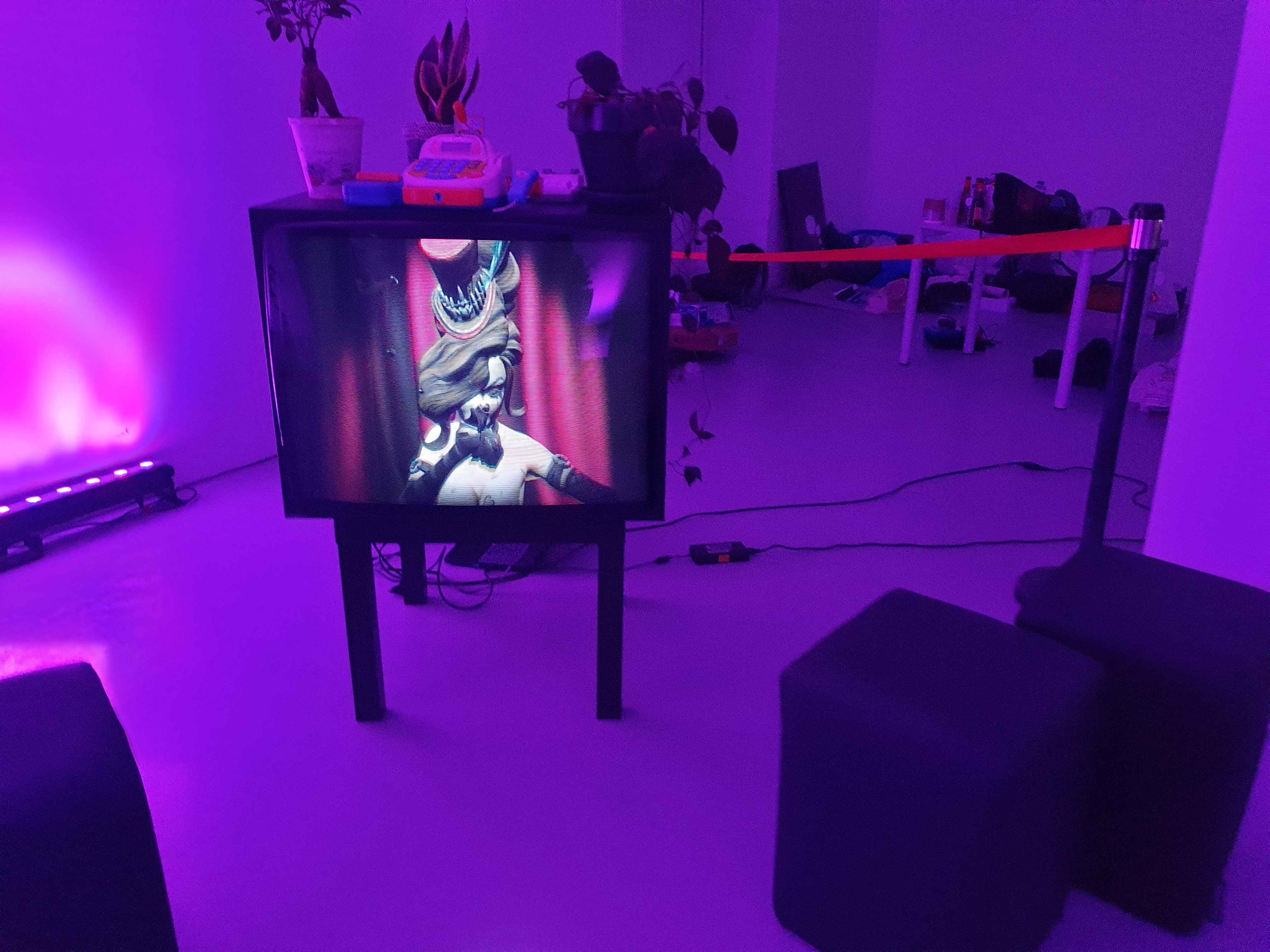
As they step into the old fishing warehouse by the sea, guests are greeted by an unfamiliar but welcoming figure, peering down from a tall LED screen. The host shares their name, cracks a joke involving cachaça-puns and disappears behind a DJ booth. After going through a door guarded by thick curtains, guests now face a bar counter stretching across the room, appearing continuous with its virtual counterpart projected onto the wall behind. Sofas, tables, glasses and bottles are visible under the dim light, accented by an occasional flicker from old TV monitors. In the air, a cacophony of conversations unfolds. Virtual and physical guests share anecdotes, philosophical musings, musical preferences and cocktail recipes. A guest calls for the host’s name, the one from the tall screen. Inside one of the glitchy TV screens, the host appears from behind the DJ booth.
About the piece
Chatsubo was a mixed-reality installation in the form of a cyberpunk bar from the future. It was integrated in the Metamersion: Healing Algorithms exhibition, which occurred in Lisbon between 16–18 May, 2024.
Inspired by early generative multiagent simulations (Park et al., 2023), we asked what sort of narratives would emerge if these artificial agents were unleashed into the real world. How would their interactions unfold? Would they form social bonds with each other? Could someone sit down at a bar and talk to their virtual self? Chatsubo was an early demonstration of an informal space shared by virtual and physical agents, a type of space in which, years later, we increasingly find ourselves.
Its backend constituted a custom-built framework for multiagent interaction with large language models (LLMs) supporting persona narratives, history and turn management as well as speech-to-text and text-to-speech functionality. Additionally, LLM agents controlled a 3D avatar in Unity, adding embodied expressivity to the interaction. They could dance, cheer, pop in and out of scene as well as call other characters into frame. The physical setting imitated a bar, containing counters and sitting spaces, while 3D scenes from a virtual bar were projected on the wall and played on TV screens spread throughout the room.
Documentation
Credits
Work done in collaboration with Carlos Stein, Alex Farac and Lydia Fettweis Neto.
References
Park, J. et al. (2023). Generative Agents: Interactive Simulacra of Human Behavior.